

Brilliant Diamond Shining Pearl Developers
It's ever difficult to know but how much of a game to change when you're remaking information technology, and that is certainly truthful when it comes to the insanely-popular Pokémon series. Go too far, and you take a chance alienating the audition, as was evident with the enjoyable merely somewhat simplified Let'south Go! Pikachu and Eevee Switch remakes of the original Pokémon Red and Blue. If you manage to combine the elements that have advanced the formula in the years since, though, you can create some of the very best games in the franchise, as was the case with HeartGold and SoulSilver on DS. Pokémon Bright Diamond and Shining Pearl fall somewhere in the middle; a pair of titles that offers a great opportunity to pick up some of the Sinnoh Dex that is missing from the current mainline Sword and Shield games, but ultimately an take chances y'all probably won't render to once you're done.

There's a foreign feeling of obligation to these remakes. Generation 1, 2 and iii have all received stellar reimaginings, and Generation four felt like the odd i out. However, instead of a Game Freak-helmed remake and love letter to the generation, ILCA, the studio handling Pokémon Brilliant Diamond and Shining Pearl, has changed the art style for the worse and failed to include many elements from the generation's best game, Pokémon Platinum.
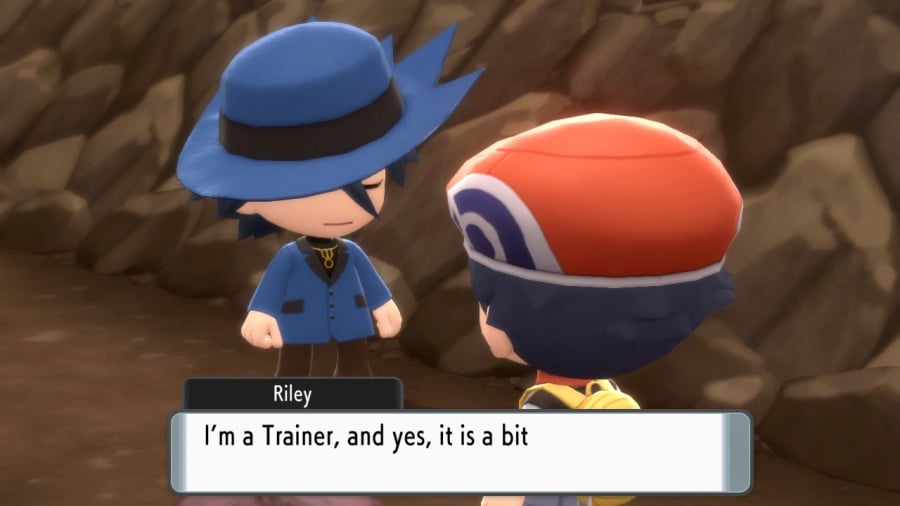
Pokémon Vivid Diamond and Shining Pearl feature a 3D 'Chibi' art style for their overworld, making all characters look like emotionless Funko Pops, and it was a existent fault. While battles have arguably never looked better – with some incredible arenas and backgrounds for your Pokemon to compete in – the overworld looks cheap in comparison. It also robs some NPCs – who were intimidating and serious in the original 2D games – of their tone completely. Why should we take this large antagonist seriously when he looks but as (un)threatening every bit whatsoever other trainer?
Every character you battle has a full-sized model resembling the mode adopted in Sword and Shield, and they uniformly look so much meliorate than the Chibi, toy-like models that cover the overworld. This really makes us wish that they'd retained the overworld calibration of the previous Nintendo Switch games, rather than endeavor to transport the squat 2D sprites of the original game into a full-3D world.
While the fine art style underwhelms, the music, still, is excellent. The Sinnoh games were home to some of the all-time themes in Pokémon history, and they've been lovingly remastered here. There's a great temper to the unabridged region, you really become the sense that it's a lived-in surround built around the imposing Mt. Coronet. In a smart move, during battles in the wild, you'll ofttimes run into the shadow of Coronet looming in the background, making the battles feel much more similar they're playing out in the earth, rather than in some cordoned-off area.
The cadre of the game is the same as it was xv years ago. Y'all're travelling from town to town collecting badges and trying to foil a plot to harness a Legendary Pokemon. If you're tired of that formula, these games will practice nil to sway you. Some smart quality of life changes include the new HM system, which means that Surf, Fly and other moves that were relegated to the lone Bidoof in your party are now handled by… a Bidoof – but this time it'll but appear when you lot need it, and no longer accept up a political party slot.
In a really disappointing step dorsum for the franchise, Pokémon no longer spawn in the overworld in the wild — instead, information technology's back to random battles in the grass when yous're walking the roads of Sinnoh. We had really hoped we'd gotten away from this antiquated system for good, but unfortunately not.
Where Pokemon do spawn in the overworld, however, is in the all-new 'Yard Hush-hush'. The Grand Underground is a reimagining of the same system from the original games, wherein players could explore, mine for shards, and meet other players. In Pokémon Brilliant Diamond and Shining Pearl, information technology'south been renovated with new biomes, which comprise roaming wild Pokemon. This not merely fixes a big problem in Generation 4 — the lack of Burn-blazon Pokemon — it too manages to include some of the Platinum Dex that has been omitted from the main game.

There'southward a slight upshot, even so: the levelling organization feels somewhat exploitable. Equally soon as we gained access to The Thousand Underground, we began exploring its various biomes and came beyond ii rare Pokémon – well, 'rare' when you consider how early on we were in the game: Absol and Houndoom. These two powerful 'mon were both just sitting in that location, seven levels higher than the remainder of our team. We managed to catch them and, for the adjacent few gyms, nosotros had completely broken the level curve.
Throw in the permanent, non-removable EXP share and your team will exist absolutely stacked for the whole game. However, that issue bated, the ability to revisit The One thousand Hush-hush and hunt for new Pokémon is very enjoyable – particularly since they're visible before battling, avoiding the incredible annoyance of the random battles elsewhere in Sinnoh.
The game runs well in both docked and undocked modes and looks very sharp on the shiny new Nintendo Switch OLED Model. It'southward non pushing the limits of graphical fidelity past any ways, only all the Pokémon models look overnice – fifty-fifty if their static animations are pretty lifeless. Moves are nicely animated, and plenty of Pokémon have their own unique animated signature assault. The frame-rate problems that plagued Sword and Shield and the later DS titles are thankfully absent, making battling a smooth experience. The top-downwards perspective as well mitigates the pop-in bug of contempo titles, as the area which the player can come across is generally only a few feet in any direction.
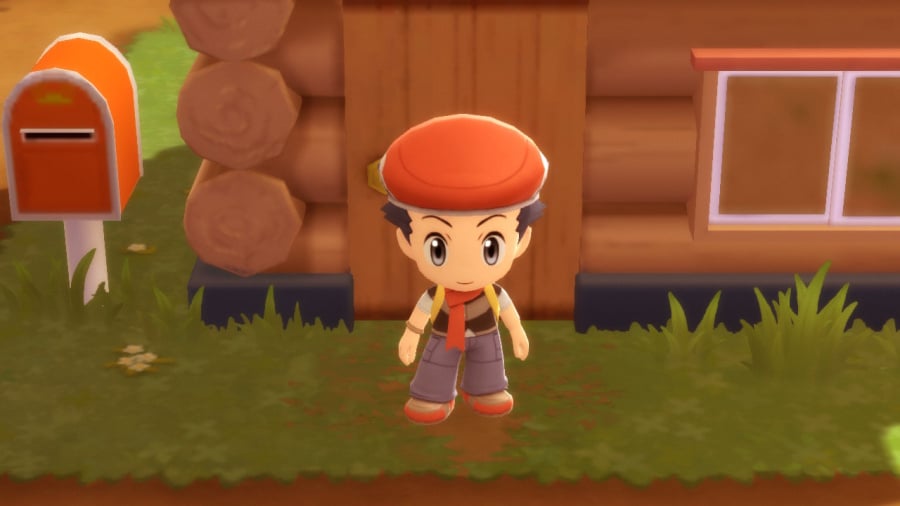
These are not bad Pokémon games by any means — they're still perfectly enjoyable — just having sampled all of the Pokémon remakes, these are the ones that feel the most stuck in the past. When HeartGold and SoulSilver came out, they became the definitive DS titles, and arguably the finest games in the series. Pokémon Brilliant Diamond and Shining Pearl don't feel similar they'll make anywhere near that level of impact. We likewise can't emphasize enough how much of a downgrade the Chibi art way is from the pixel art of the originals. Non only does information technology make the games feeler cheaper, information technology ruins the blueprint of the game'due south chief antagonist.
Conclusion
While some of the slower elements of the original games accept been stock-still, and The K Undercover makes up for the insufficiently weak Pokédex, Pokémon Brilliant Diamond and Shining Pearl's new art style and a few other stumbles make this pair of games a somewhat disappointing retread of Generation iv. They're too very conspicuously in the shadow of Pokemon Legends: Arceus, the upcoming open-globe-like Pokemon game that has fans hoping it can take the series in exciting new directions beyond 20-year-onetime mechanics. If the remit of these remakes was to remain faithful to the original Gen iv pair, we wish they'd likewise stuck to the pixel-art aesthetic. Aside from The G Underground – and the connectivity with the current games in the series – there's very little reason to play Pokémon Brilliant Diamond and Shining Pearl over your original DS copies.

Brilliant Diamond Shining Pearl Developers,
Source: https://www.nintendolife.com/reviews/nintendo-switch/pokemon-brilliant-diamond-and-shining-pearl
Posted by: valeroplutch1994.blogspot.com
0 Response to "Brilliant Diamond Shining Pearl Developers"
Post a Comment